Infrastructure / SaaS
MoldNS
A DNS hosting product, built and branded from scratch. The pitch is one line, soluția completă pentru găzduirea DNS, and the whole site is engineered to make that line believable: a calm hero, six honest feature cards, and a single button that gets you managing records.
Услуги
Branding · UI/UX Design · Frontend Engineering · Copywriting
Технологии
Nuxt.js · Tailwind CSS · Node.js
Positioning
Soluția completă pentru găzduirea DNS
DNS is the layer nobody thinks about until a domain goes dark. So the brief was the opposite of dramatic: make a DNS product feel trustworthy, simple, and quietly professional, with nothing to prove.
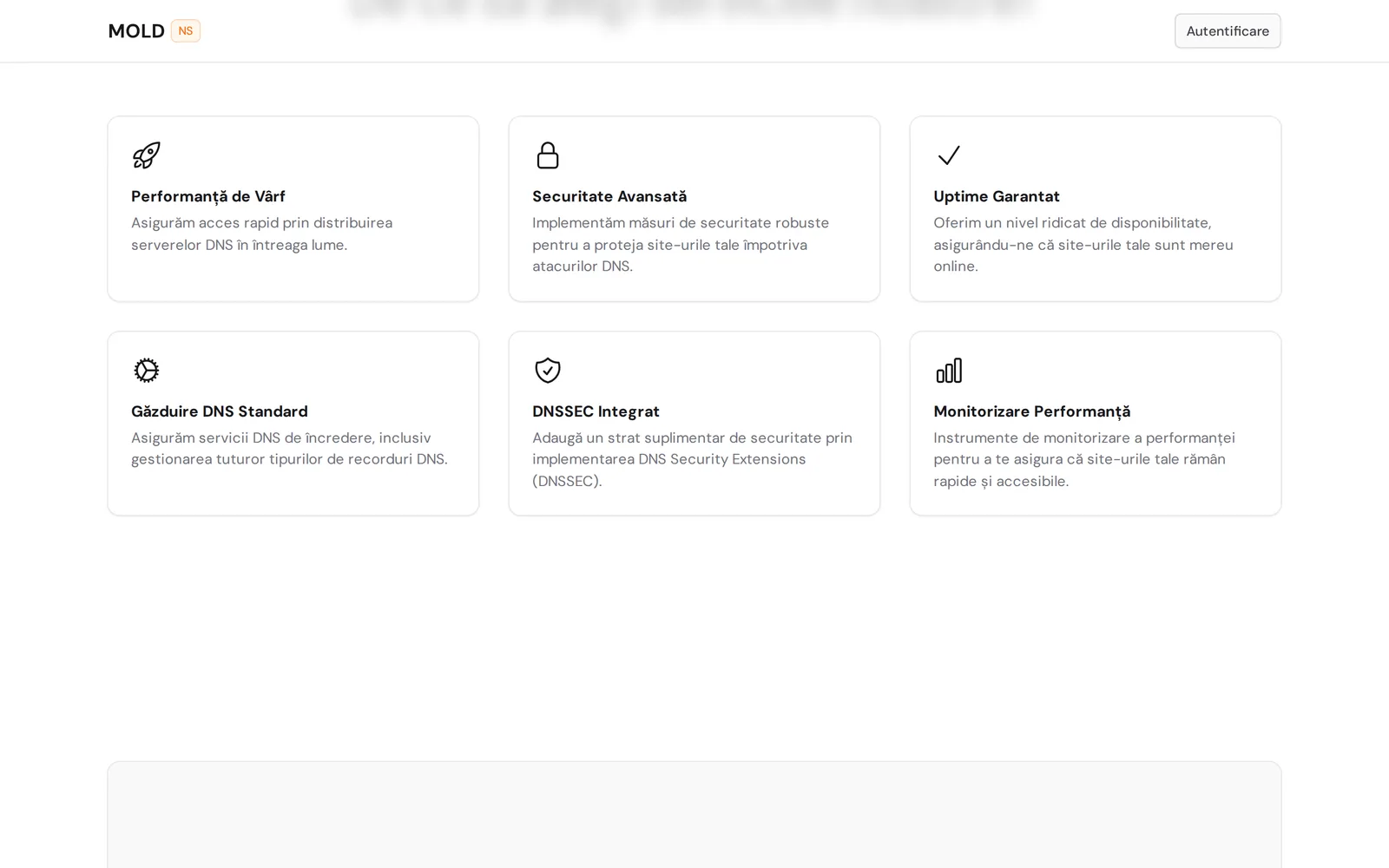
We built the identity around a single mark, MOLD in ink black with an amber NS chip, and let it carry a deliberately minimal site. One headline, one promise, one call to action, Începe Acum. Everything Romanian-first, because the audience is local businesses, not a global enterprise pretending to be one.
The product, in six cards
De ce să alegi serviciile noastre?
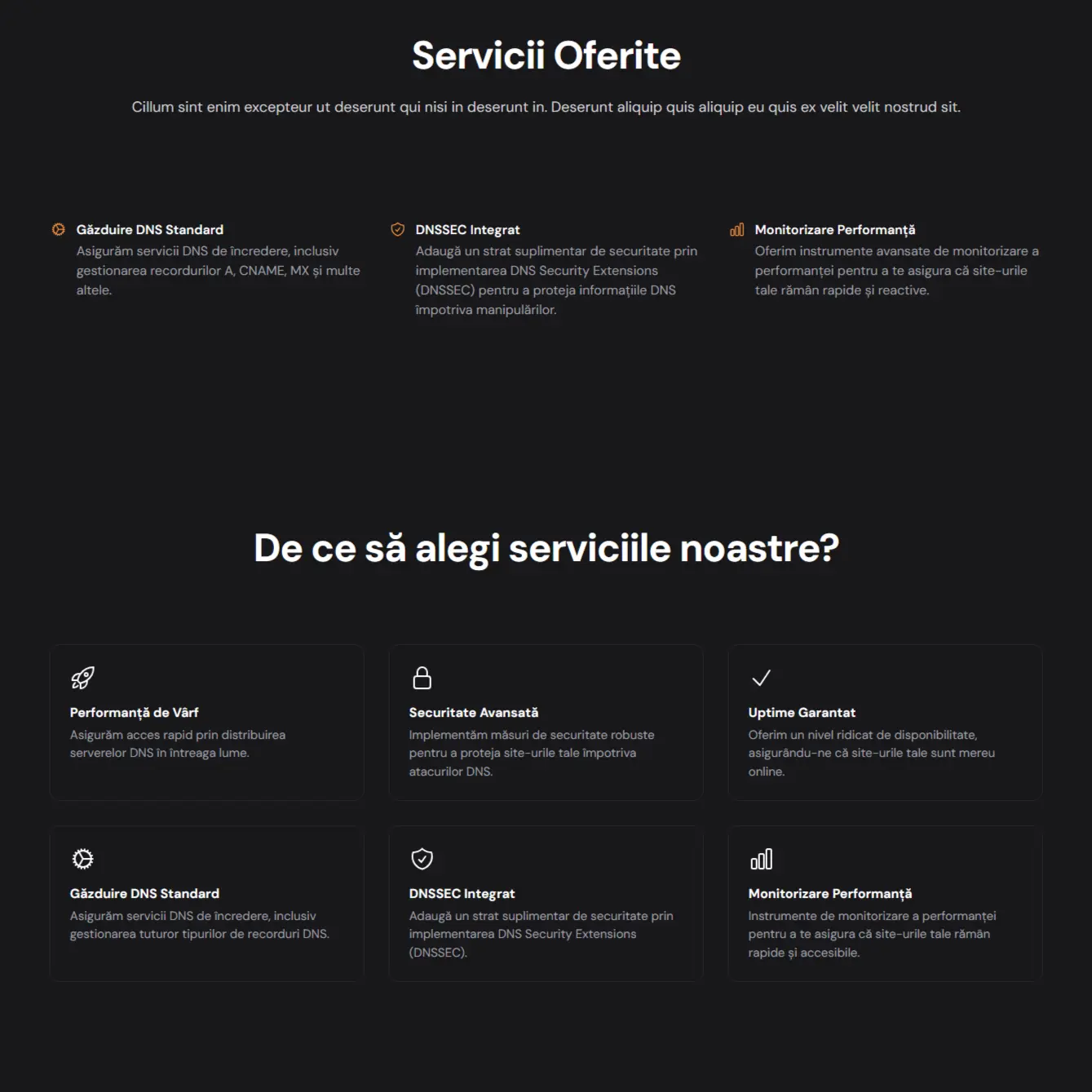
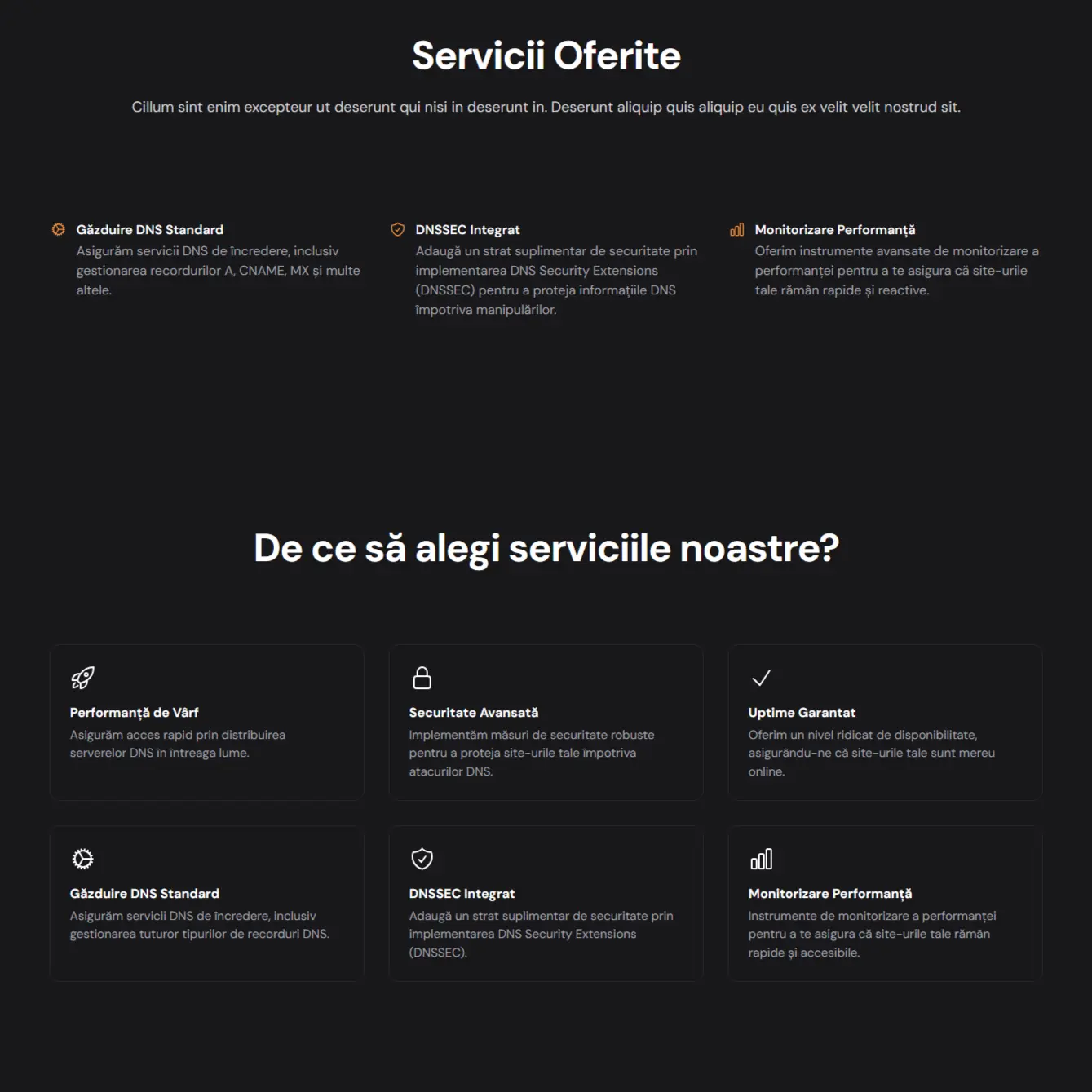
Instead of a feature firehose, the site answers one question with six tiles, each a real capability stated plainly:
- Performanță de vârf: DNS servers distributed worldwide for fast resolution
- Securitate avansată: hardening against DNS-level attacks
- Uptime garantat: high availability so sites stay reachable
- Găzduire DNS standard: management of all standard record types
- DNSSEC integrat: cryptographic signing built in, not sold as a tier
- Monitorizare performanță: tooling to keep hosted sites fast and accessible
No jargon, no asterisks. Each card is icon, title, one sentence, the kind of restraint that makes infrastructure feel safe to buy.
One door in
A single button, then you are managing records
The page ends where it began: Începe Acum, găzduiește recordurile DNS a domeniilor tale. One panel, one Autentificare button, no signup maze. The marketing site exists only to get the right person to the console as fast as possible.
A light/dark toggle in the footer respects the visitor's preference, and the layout stays composed at every breakpoint, so the product reads the same whether someone lands on it from a desktop at the office or a phone mid-incident.
Следующий кейс
ФАЙЛ 14